

NEWS | RESEARCH
Q3 2026 White Paper
Rising Interest Rates and Geopolitical Concerns Weigh on Consumers and Capital Markets Activities

Retail leasing net absorption experienced a robust Third Quarter 2026 as tenants committed and opened stores amid ongoing supply-side constraints. Although consumer sentiment continued at historic lows, consumers drove retail sales higher for both essential and non-essential goods (but with an increasing focus on value). Investment activity slowed amidst rising interest rates, but institutional investors remained active, particularly with regard to portfolio acquisitions.
Consumer Confidence Wanes in Face of Higher Inflation
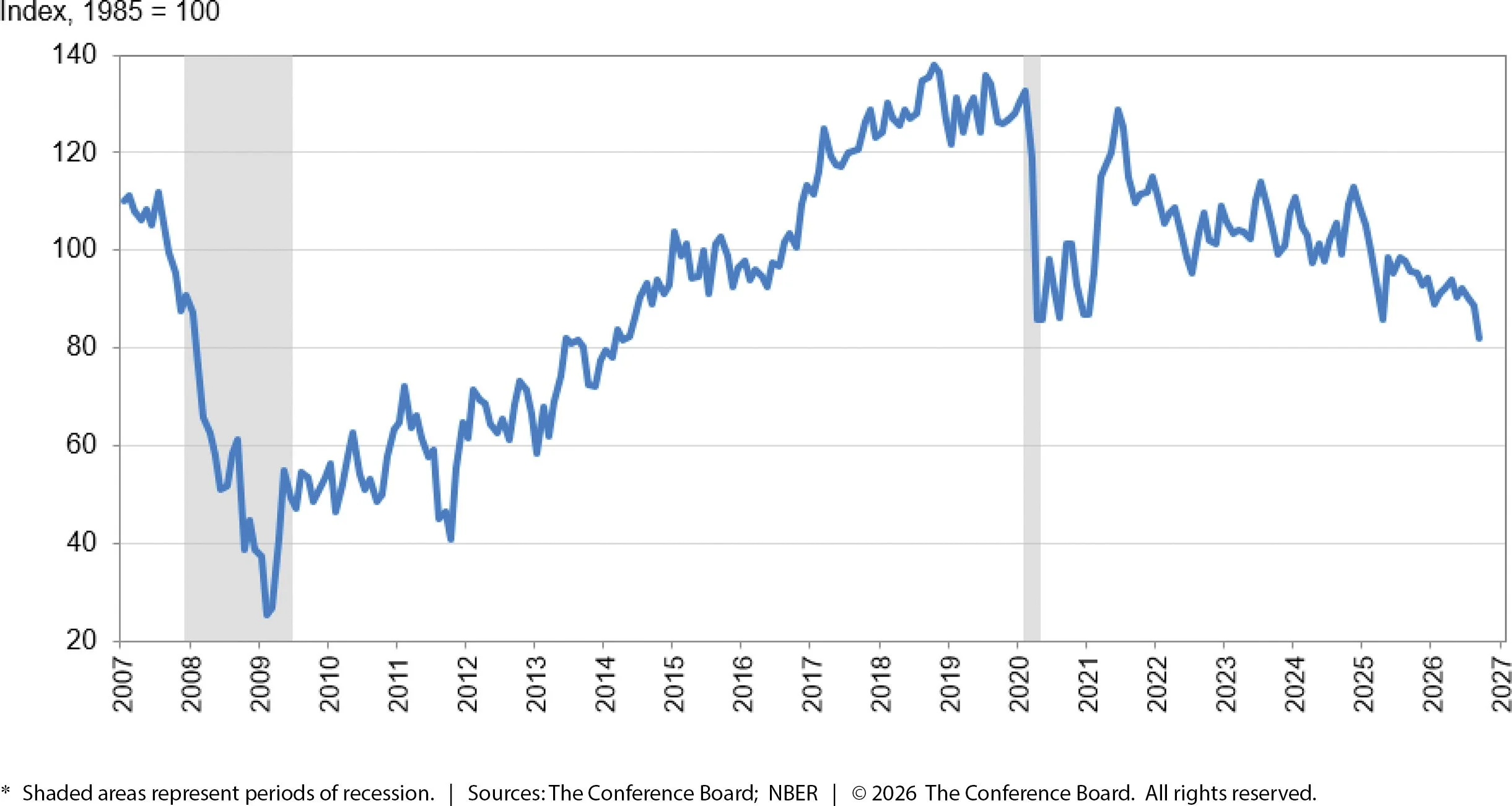
Higher gas prices and inflation drove U.S. consumer and small business confidence lower during the Third Quarter 2026. According to the University of Michigan Consumer Sentiment Index, sentiment is 15% below January 2026 and 12.7% below a year ago. Similarly, The Conference Board’s September Survey reflected a 6.7 point decline for the month, with its Present Situation Index retreating 7.9 points and The Expectations Index falling 5.9 points, its third consecutive monthly decline. The drop in sentiment suggests consumers are pricing in weaker purchasing power. According to Dana M. Peterson, Chief Economist for The Conference Board, “Consumers’ write-in responses regarding factors affecting the economy were mostly pessimistic in September. References to prices, the high cost of goods and services, and oil and gas prices in particular, rose to new heights, reflecting September’s surge in fuel costs.” In the National Federation of Independent Small Business’s September Small Business Economic Trends Report, the Optimism Index fell 0.8 points to 97.9, below its 52-year average of 98.0. Six of the 10 components declined, led by expected business conditions and the share saying that it is a good time to expand. The Uncertainty Index rose one point to 90, well above its historical average of 68.
CONSUMER CONFIDENCE INDEX
Job growth was uneven during the Third Quarter 2026, with a 23,000 loss in July, a 162,00 gain in August and a 29,000 gain in September, resulting in an unemployment rate of 4.2% in September. Per Claudia Sahm, a former Federal Reserve analyst and the chief economist at New Century Advisers, “The labor market is OK, it’s just who you are in the labor market that matters, and more than usual.” Hiring remains concentrated in a handful of sectors, including education, health care and social assistance services, with the health care and construction sectors contributing the largest payroll gains.
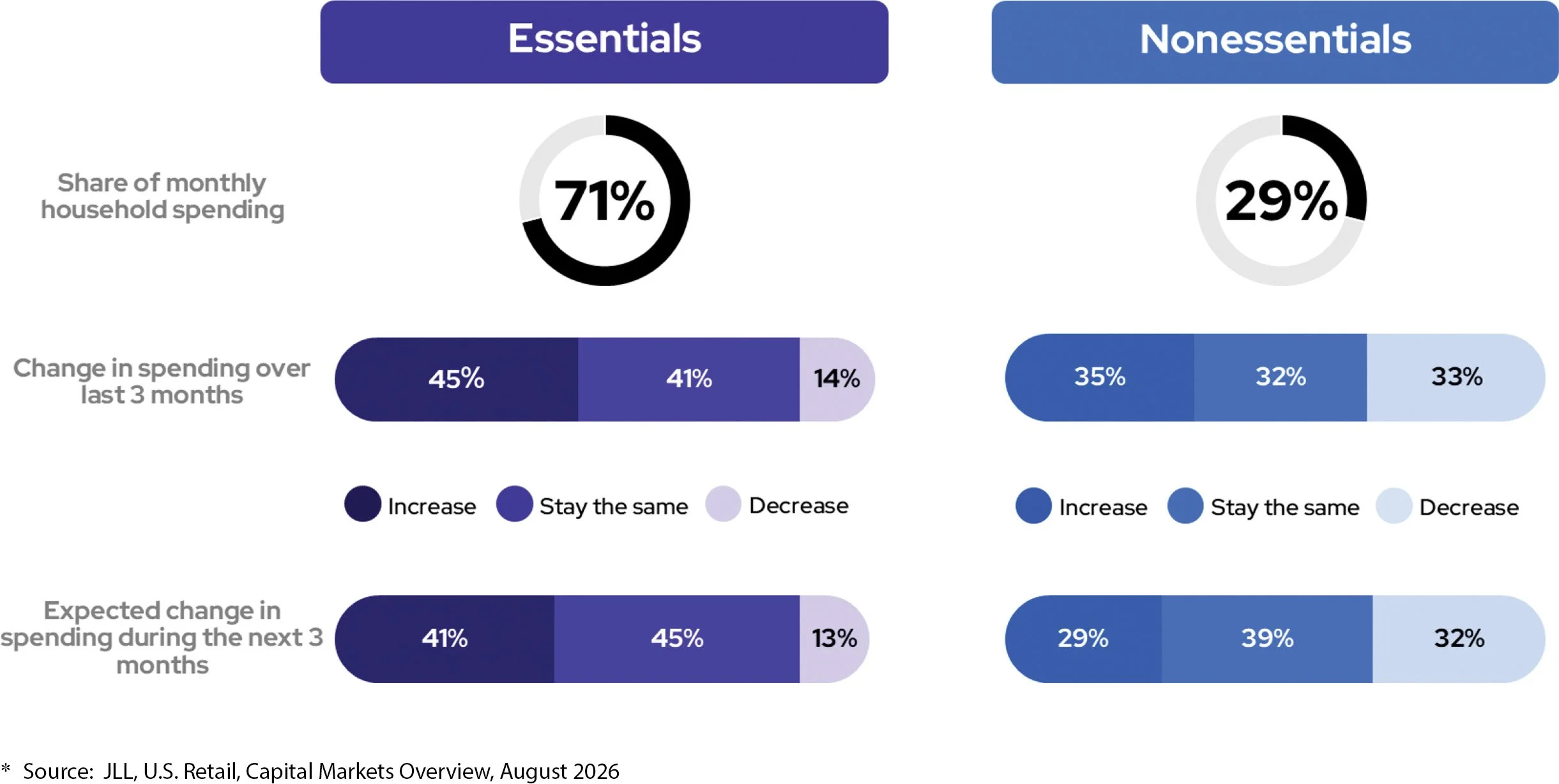
The U.S. Census Bureau reports of retail and food services sales for the Third Quarter showed a 5.5% nominal year-over-year gain. Media outlets issued fairly optimistic reports regarding this news but acknowledged that most of the nominal growth was due to rising prices, particularly with respect to the cost of gasoline. Comments by James McCann, senior economist at Edward Jones, were fairly representative of this sentiment, when he was quoted as saying, “The pace of underlying consumer spending looks to be advancing at a healthy rate. This should help provide some reassurance around the resilience of the U.S. economy in the face of increasing short-term headwinds to growth, including higher interest rates, a renewed spike in oil prices, trade disruptions and waning support from tax cuts.” Other commentators were more sanguine, noting the continued K-shaped economy and the pressures exerted on middle and lower-wage earning households. Consumers became more selective across the board and sought out lower-priced goods, particularly relating to essentials, which comprise about 71% of monthly budgets. According to Scott Anderson, chief U.S. economist at BMO Capital Markets, “More consumers are losing their purchasing power. We expect this to be an increasing drag on real consumer spending growth in the fourth quarter and into 2027.” Per Tom McGee, president and CEO of the International Council of Shopping Centers, “…ICSC’s latest data shows that many households are making increasingly deliberate tradeoffs to manage their budgets. Consumers are placing greater emphasis on value, becoming more selective about where they spend and keeping a closer eye on their financial flexibility. At the same time, growing concern about job security suggests that income stability may be emerging as a bigger consideration than inflation alone. The result is a consumer who remains engaged and willing to spend but is making purchasing decisions more carefully than ever.”
ESSENTIAL AND NONESSENTIAL SPENDING ALLOCATION, RECENT CHANGE AND EXPECTED CHANGE
Shopper visitation trends confirm these sentiments, as well as a preference for “value.” According to Placer.ai, wholesale clubs, off-price retailers, home improvement, grocery and affordable indulgences (e.g., hobbies, crafts and books) outperformed other categories, and promotions reliably drove traffic. Consumers became more selective, as Placer.ai noted that there seemed to be a direct correlation between higher gas prices and declines in dining demand and longer-distance discretionary trips. Closer-to-home visits prevailed with nearly 60% of visits originating within five miles – often with shorter dwell times at each stop (the majority of visits are less than 30 minutes, with the largest dwell-time bucket under 15 minutes).
In the apparel segment, luxury brands continue to suffer from the loss of aspirational shoppers. The fact that merchants like Ralph Lauren, Coach and Burberry have experienced a rebound relates directly to these brands’ lower prices – something that LVMH and Kering have been less willing to do, even though more than half of their business comes from middle-class shoppers. Instead, according to Deloitte in its Global Powers of Luxury 2026 report, reengaging the customer through customer experience and loyalty lead as the top opportunities, anchored in high-touch service, access and community. Foremost among consumer trends over the next 12 months are hyper-personalization and data-enabled services, as luxury clientele seek tailor-made experiences at every touchpoint. The industry’s leading companies are directing capital toward strengthening brand distinctiveness, reactivating desirability, and deepening cultural relevance.
Open air centers continue to outperform other formats in 2026, especially where landlords have succeeded in positioning them as a “third place.” The most successful neighborhood centers remain grocery-led and layer in high-frequency and service-oriented uses to encourage convenience and routine. Lifestyle centers are increasingly dining and experience-led and optimize for dwell time, destination appeal and cross-shopping. In both product types, fitness and wellness formats have replaced apparel as the most successful e-commerce-resistant traffic generators. Coffee and limited-service dining also function as meaningful frequency engines.
The impact of higher borrowing costs and the effects of federal government spending reductions have impacted the Greater Washington, D.C. economy negatively, according to Ian Anderson, CBRE’s senior director of research and analysis, and his REVIVE Regional Vibrancy Index. Per Anderson, a pullback in commercial real estate transactions resulted in a steep decline in the Index, noting that investment sales “seem to be in a little lull.” He maintains optimistic, however, “that the broader trends are showing at least stabilization, if not growth.” Anderson notes that apartment absorption in the region has rebounded with positive net gains in occupied units, showing underlying regional strength. Also, Metro rail ridership has experienced periodic seasonal surges, despite soft hotel occupancy.
Retail Net Absorption Experiences Robust Third Quarter
Building upon positive Second Quarter results, U.S. retail net absorption in the Third Quarter 2026 totaled 3.5 million square feet, the strongest quarterly result since Q4 2023.
SHOPPING CENTER NET ABSORPTION
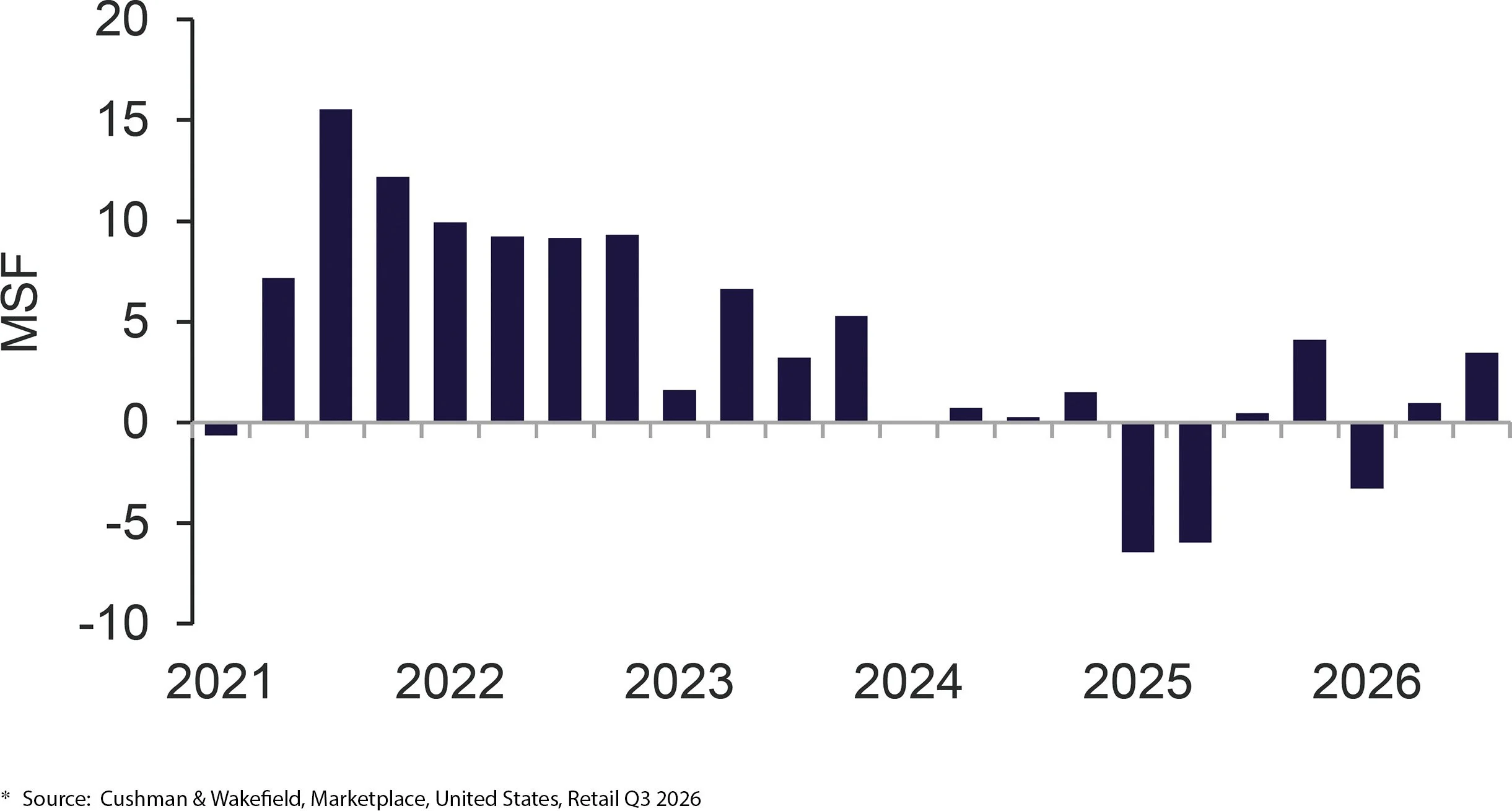
Leasing activity occurred amidst continued supply side constraints, as only 2.3 million square feet was delivered during Q3 2026 and 15.1 million square feet remains under construction. Significant growth in supply is not foreseeable in the near future, as already high construction prices are expected to increase further due to the energy shock and general inflation. Debt costs are not expected to decrease significantly and may increase, subject to Fed policy, the bond markets and general market uncertainty.
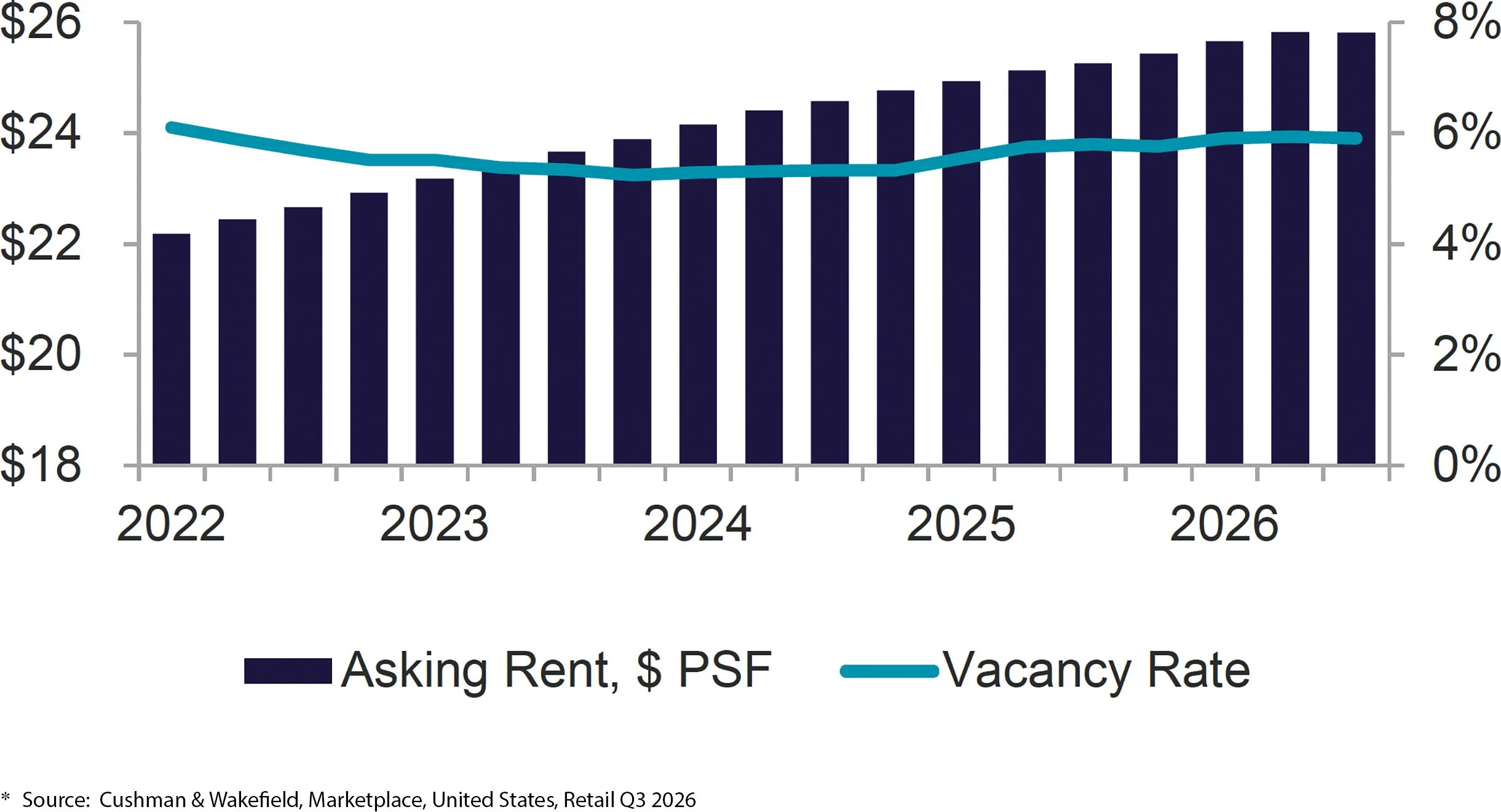
Q3 2025 vacancy ended at 5.9%, down slightly from 6.0% at the end of the Second Quarter. According to Cushman & Wakefield, asking rents in Q3 2026 averaged $25.82 per square foot, up from $25.65 per square foot at the end of Q2 2026, and representing 2.2% year-over-year rent growth. Per JLL, releasing downtime averages 7.4 months, with 26% of available space filled within five months. Per JLL Senior Director of Americas Retail Research James Cook, “It’s definitely a landlord’s market. It has been for a number of years now, with no new significant construction on the horizon. Every retailer that’s looking to expand right now has to look very closely at logistically how they’re going to meet their expansion plans.”
According to Integra Realty Resources, more than 90% of retail markets surveyed are in recovery or expansion modes, with tenants favoring modern, well-located and specialized properties over older or commodity-oriented assets. Per Coresight Research, more stores have opened this year than have closed, with a net gain of 127 openings through August 28th, accounting for a net gain of 28.6 million square feet. Most active have been Whole Foods, Aldi, Ross Dress for Less, TJ Maxx and bookstores (Barnes & Noble and independents), among others.
OVERALL VACANCY AND ASKING RENT
Washington, D.C. Metro Performs in Line with National Statistics
Based upon data presented by Cushman & Wakefield, Washington, D.C. metro area retail trends are in line with national figures. It estimates the metropolitan area open-air retail center Q3 2026 vacancy rate to be 5.4%, with asking rents of $36.12 per square foot, 646,687 square feet under construction and an in-place inventory of 119.7 million square feet. Cushman & Wakefield reports 554,048 square feet of net absorption for Q3 2026 for open-air retail in the Washington, D.C. metropolitan area.
Retail Investment Volume Slows Amidst Rising Interest Rates But Portfolio Acquisitions and Recapitalizations Continue
Rising interest rates began to threaten retail acquisition activities during the Third Quarter 2026, as a growing number of prospective buyers threatened to walk away unless sellers offered better terms. According to Jeff Powers, a Cushman & Wakefield managing director, “Rates went up, just a few days ago and I’m already getting calls where they’re talking retrade.” Per Conor Lalor of Newmark Retail Capital Advisors, in retail, the asks for price reductions have been smaller than with other product types, typically in the 1 – 3% range, and deals are still closing. Lalor indicates that this is a result of the supply side constraint and general lack of product on the market; however, he does not feel that retail is immune to the effects of the current interest rate environment, as many deals are being underwritten assuming significant rent growth, and rent growth has slowed in recent quarters.
Given rising interest rates and compressed cap rates, CBRE indicates that it estimates that 70% of active investors seek core-plus returns. According the JLL, some investors searching for higher yields are focusing on secondary markets. It also indicates that high street retail pricing has expanded 200+ basis points since 2021 and also offers opportunities.
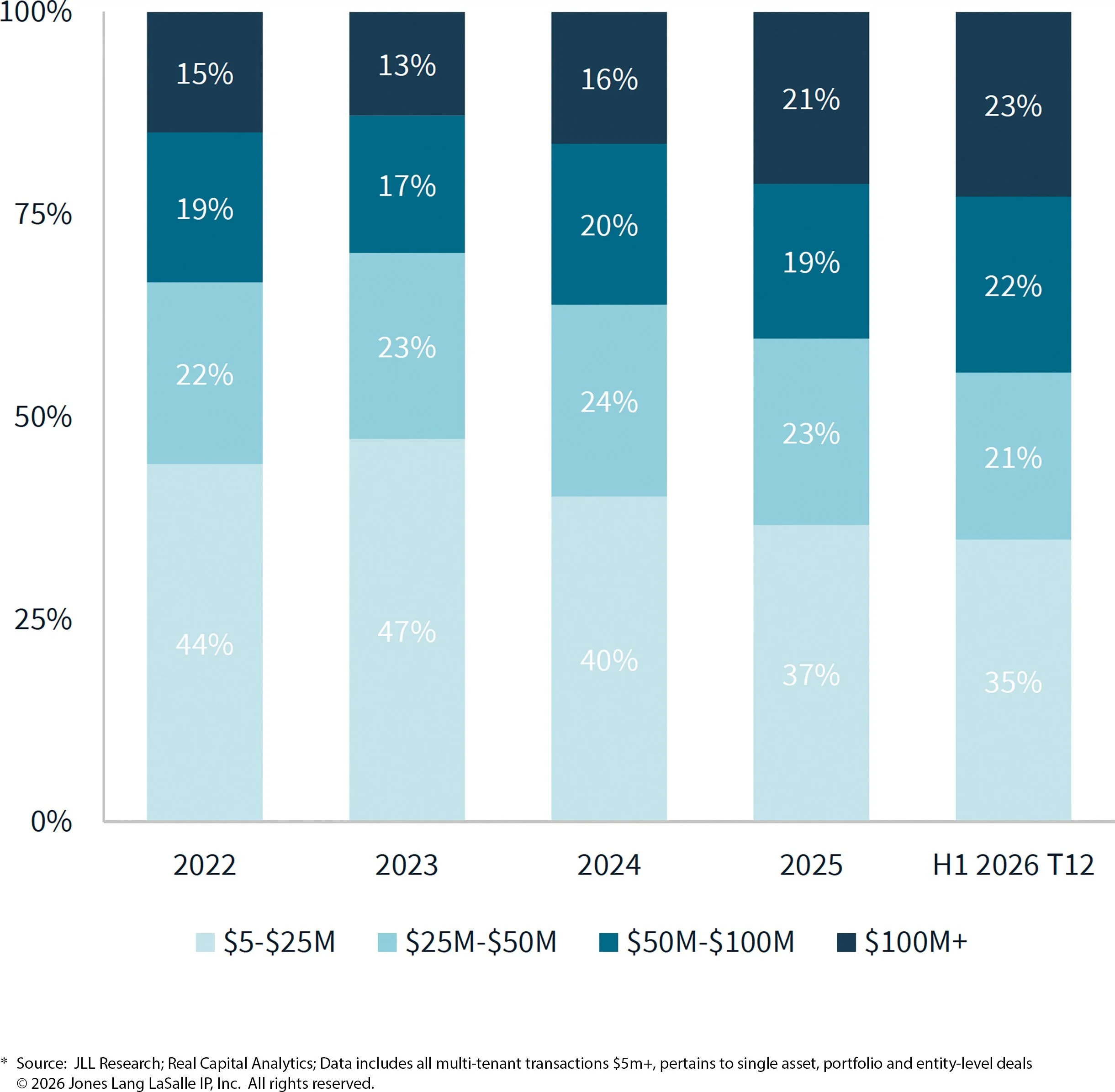
Large portfolio transactions have continued to dominate, with deals $100 million+ representing 26% of the investment market on a trailing 12-month basis. According to CBRE, “bigger is better,” as investors and lenders seek scale and diversification. Large capital allocators seek scale via mergers and acquisitions, portfolio buys, joint ventures and operating company acquisitions. During the quarter, Brixmor Property Group, the Abu Dhabi Investment Authority and Everview Partners announced that their venture would acquire 92 grocery-anchored shopping centers for $1.7 billion. Also, Brixmor announced that it would pay $636 million to acquire 23 grocery-anchored centers from Slate Grocery REIT. Philips Edison & Company announced the sale of 13 grocery-anchored shopping centers to a venture that it sponsors with its partner Northwestern Mutual for $377.5 million. Meanwhile, Edens raised $850 million to fund upcoming developments and acquisitions across its portfolio from institutional sources, while GCM Grosvenor announced its investment of $200 million in a fund focused on grocery-anchored retail, sponsored by Hyperion Realty Capital. Hyperion hopes that the fund’s aggregate property value will rise to $1 billion, as additional investors are brought on board. In July, Norges Bank Investment Management invested $500 million with Asana Partners to build a retail portfolio. This announcement came after the Q2 announcement that Norges would be venturing with TPG, PSP Investments and La Caisse to acquire Echo Realty.
The Washington, D.C. metropolitan area has seen an uptick, with roughly a 30% year-over-year increase in retail transaction volume. Per Brian Hosey, senior managing director and market leader for Marcus & Millichap, “Washington area retail properties have remained resilient despite ongoing labor market pressures.” He adds, “Investor activity has strengthened across the metro, with Northern Virginia posting some of the largest gains in transaction volume.”
U.S. RETAIL, SHARE OF INVESTMENT, BY DEAL SIZE
For non-institutional sponsors, equity financing has become more scarce. According to Howard Grossman, senior counsel at Cozen O’Connor, this is due to a “hesitancy to deploy where uncertainty continues about market direction and interest rates.”
Debt capital continues to be available, albeit at increasingly higher cost and retail has been a favored asset class. Per Grossman, “The most favored asset class for lenders continues to be industrial properties, with retail coming in a strong second.” According to JLL, the active lender count for retail properties is up 151% from the Q4 2023 trough, as banks, life insurance companies and debt funds compete more aggressively for loans. Still, 86% of retail loans now carry terms of five years or less, as borrowers seek flexibility should interest rates decline toward the end of the decade.
Looking forward, some of the largest real estate finance companies are expressing concern. The CRE Finance Council reported that its Third Quarter 2026 Board of Governors Sentiment Index fell 17.5% in the Second Quarter, its lowest reading since the Third Quarter 2023. Ninety-two percent of survey respondents expect mortgage and cap rates to weigh negatively on commercial real estate finance businesses, and 62% expect the U.S. economy to perform worse over the next 12 months. CREFC Managing Director Raj Aidasani states, “This is the most negative our board has been in three years. Our members’ concerns now extend past the next Fed decision to inflation, fiscal deficits and the outlook for long-term borrowing costs.”
Given its opportunistic/value add focus, SageTrust Properties approaches the current environment cautiously, but continues to be in the market to source retail open-air property acquisition opportunities and has the capability to manage its assets. Let us know if you would like to schedule a meeting with us to discuss your needs and our capabilities further.